

who would you be if there was no before?
the psychology of the omnipotent child

When people feel like they don’t possess the capacity for the needs or emotions of others they will often, consciously or not, need those around them to take up less space. Parents like this will not always, but often, create a high friction dynamic. A child is biologically driven to cross the bridges the parent keeps building, in order to develop their relationship with the parent, but also within themselves. The bull and the matador, two needs pointed straight at each other.
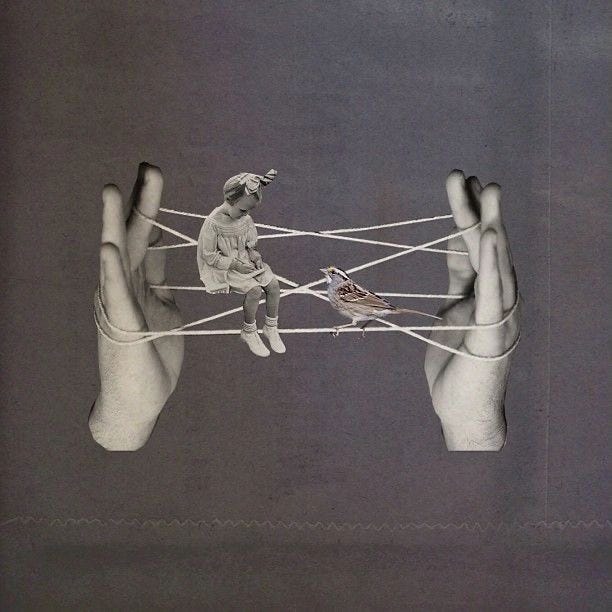
Most of my childhood was taken up with being on a constant lookout for what chain reaction I’d set off next. You find that after a while it eventually just gets easier to build your life around all the guessing. Stay in your room, keep things quiet, use the kitchen when no one is there.
It’s farfetched to expect a five year old to think, my parent doesn’t have the emotional capacity for this right now. What you get instead is, I must be doing something wrong.
Experiences like these create a lot of warped butterfly effects later on down the line. You lose moments where emotional disconnect gets repaired, no one ever seems to address anything so instead you fall in line with everyone else’s silence and eventual forgetting.
You are forced to put up with an unfair amount of physical or mental discomfort, usually excused under the statement: “We only want what’s best for you.”
Moments for natural exploration are taken from you as what happens if I try this, is crowded out by, what happens if I get this wrong and someone catches me.
And you become distant from kids your own age. Maybe asking for things like going to a friends house always starts problems, or you become worried to invite friends over just incase. If you always manage to cause fights by saying the wrong things especially when you dont mean to, then perhaps while everyone else is fully immersed in a playground game, you end up always being a little outside, double checking yourself.
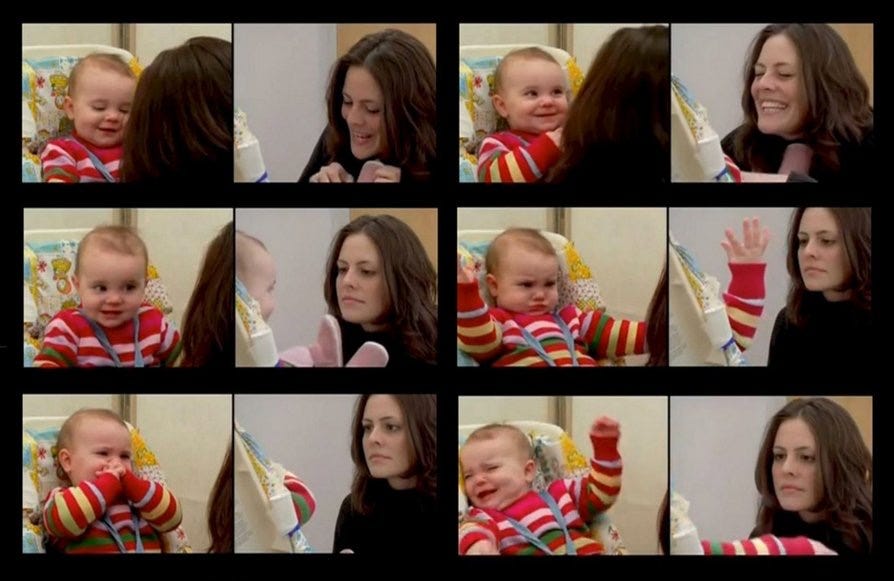
In what is known as the Still Face Experiment, developmental psychologists found that when a caregiver suddenly becomes almost ‘shut off’, the child is able to pick up on this switch almost immediately. They start to smile bigger, or make random noises. They will wave their arms desperately trying anything they can to get their person back.
In our first one month of living we can only focus clearly on about 8 to 12 inches away. By ages three to five is when our vision actually finally gets to its matured level, and lessons in how the different things we do cause a response.
As humans we primarily navigate life through being responded to. That’s how you learn about hunger, about what feeling ‘safe’ means, etc. It also means that children will often need comfort for reasons that wont always make sense.
There is no good reason to raise a child through fear or avoidance. Adults know it is wrong, which is why it commonly happens away from strangers and behind closed doors.
To no surprise, this type of upbringing is consistently linked to worse long-term outcomes. Some to name a few being, poorer emotional regulation, more aggression and weaker relationships with parents. It is a fleeting immediate fix that robs the child of ever getting to understand the why behind anything.
For example, punish a child too hard and too consistently, for being an excitable kid, and they may start to develop this constant background of fear in their life. Eventually maybe they stop being so loud infront of others, and dont really speak up anymore, until they don’t really at all.
Reality has been too far distorted because you now, at six or seven, truly believe that you can both cause limitless amounts of damage and also fix it all. That you can completely ‘destroy’ your emotional needs while also be endlessly understanding of the needs of others. These are symptoms of feeling omnipotent. And at arguably the worst possible age to do so.
Maybe if I just sit up straighter, or speak more clearly, I can fix the whole family myself.
Or
See, I already know, You dont have to tell me again.
Pull the strings and you eventually find a loop. Memories are connected to feelings that are connected to another experience and so on. It is what makes some patterns so difficult to heal from. They become too enmeshed with who you are, and too tangled up with everything else.
One thing pulls another and now you find its become a habit to go quiet with a loved one rather than saying what’s actually wrong. The same silence that used to creep behind you down the hallway as a kid.
Because it briefly softens uncertainty, the habit reinforces itself into a cycle.
Shame. Uncertainty. Denial. Victimhood. Comfort-seeking. Shame.
You get older but some parts of you keep becoming the same person. Why you act the way you do becomes harder to question because the very things you rely on to feel safe are the same things that keep you stuck. And the habits that once protected you eventually start protecting themselves.
If you look at everything as if it started right now, this exact second. As if the past were beside the point. What is there? What would that freed up mental space go towards. Would it be easier to see that just because you become accustomed to the way youre living, does not mean you’re doing it for you.
Everything is enmeshed with everything else, who knows how long it will take to untangle it all if that’s what you want to do. But are you headed somewhere in the meantime? And is that a place you, right now, actually want to be heading towards?
You can very easily become protective of yourself for all the right reasons, and still end up too far the other side,
putting up with discomfort in all the wrong places.
I really liked the idea that safety can outlive the danger that created it. We don't always carry the past because we can't let go. Sometimes we're carrying strategies that once made perfect sense, and that's a very different place to begin from. The hardest patterns are often the ones that once made perfect sense.
a childhood trauma that still lingering deep through me still. i still resent them tbh. my parents. for ruined me like this.