

you need more than something to escape
on the intimacy between rejection and identity

I knew from a young age exactly what I refused to become, the kind of person I would spend my life trying not to resemble. And for a long time I understood myself more through what I rejected than in what I desired, this certainty gave shape to my decisions.
Knowing what you reject can feel almost indistinguishable from knowing yourself.
You find direction in the form of something to move away from until of course you eventually realise that this tells you very little about where it is you want to go.
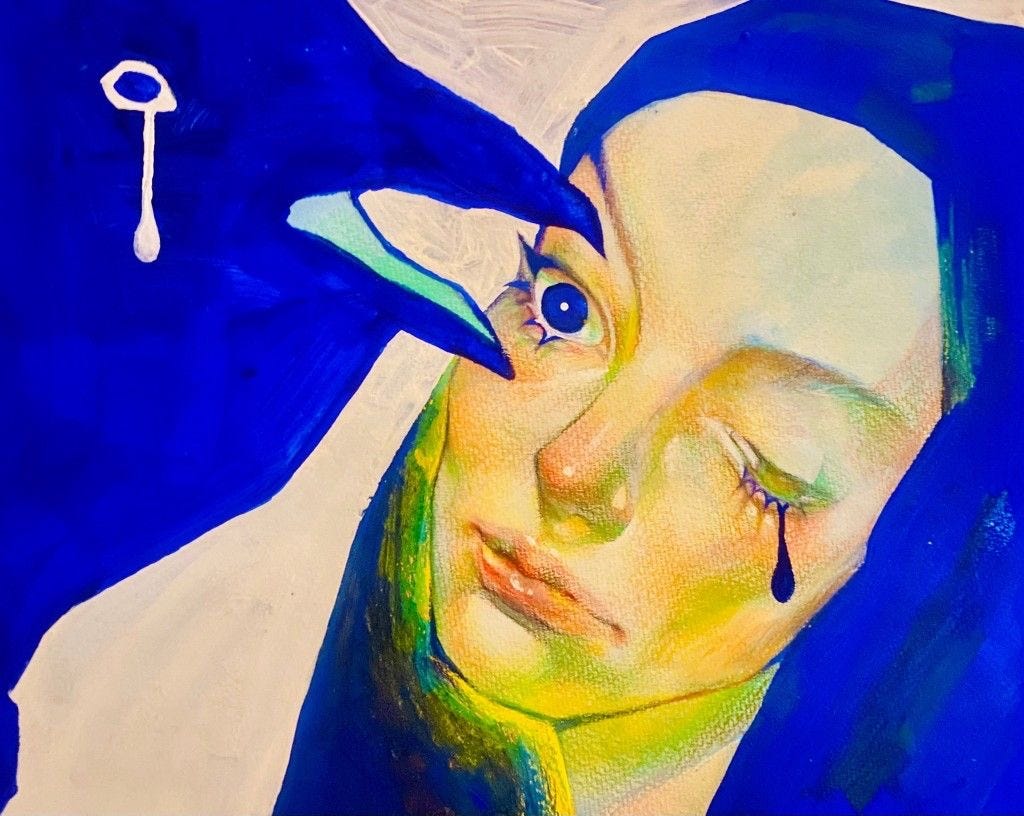
Growing up is partly the painful process of returning borrowed eyes and discovering your own. Before we develop our own understanding of ourselves we look towards the people who raised us to teach us.
But when the adults around you remained blind to the parts of themselves that kept hurting other people, you see with your own eyes that someone can claim they are doing something good while taking their own pain out on those around them.
It becomes more and more plausible to believe that those same things are waiting inside of you too, hidden beneath your own intentions. That what once hurt you might one day find another life through you.
Fear can feel hereditary when you know what it means to have a childhood coloured in by adults who never confronted their own shadows.
The blindness of those who hurt you teaches you that self-awareness cannot be assumed, which is why you are so fearful of your own blind spots. And yet when so much of your identity is built on not being something, who are you becoming instead?
What exists beyond the need to be different, to not be them?
Self differentiation is a concept used to describe the ability to maintain a sense of who you are while still being emotionally connected to your family. Examples of low differentiation would be when you are absorbed into your family emotional world, when you parents fears and options becomes your own. And when you are defining yourself entirely against them.
Rejection is its own form of loyalty when every choice is made in response to what you are running from.
Imagine spending your entire life holding a compass, never looking at where you want to go, but only using it to make sure you are moving further and further away from where you began. In learning every direction you refuse to take, you cage yourself spending your life trying to prove you are free. It changes what feels available to you, narrowing your imagination as your whole life slowly morphs around avoidance.
A lot of us who grow up in difficult environment develop a sort of negative identity. Inside of thinking what they are, their sense of ‘I’ has been made up from subtraction.
I am not angry. I am not selfish. I am not weak.
Yet studies in psychological research have found that those whose goals are based primarily around avoiding feared outcomes develop lower wellbeing over time, which included a weaker alignment between the life you are living, and the person you want to become.
You can spend years carefully dismantling an old identity, piece by piece, without ever discovering what you are building in its place since although avoidance can protect us from repeating the past, it alone offers laughable little about what should replace it.
I will never be like them. I would never treat a child the way they did.
Many of us who grew up around hurt carry a private promise to ourselves that we will create something different. Something good. Even so, two truths can exist at once, if every decision you make is based on not being them then they still remain present in every decision. No longer giving instructions from outside of you as they have now become a reference point from within.
A measuring stick between you and everything else.
Each choice you make in reaction is one less made in curiosity. It is a psychological trap, in defining yourself through opposition you are still looking at yourself through the shadows of others.
The person who spends their life proving that they are not controlling may never question whether they are controlling themselves instead. Because although opposition creates direction, the strings between you and the very thing you believe you have left behind is stretched across years of distance but remains attached.
Many times, the things we run from have the most influence because we never stop looking back.
There is more than one way to carry the past, in longing, and in resistance, and no obvious moment when you can finally declare you have successfully succeeded at not becoming someone else.
You’ll grow extraordinarily good at running, learn a whole repertoire of swerves and quick reflexes, without ever discovering what it means to walk deliberately towards something and not because you can’t shake the ever looming feeling that something is still chasing you.
Avoidance is a poor compass.
And it alone is not enough to help you find the points in life where you can look at what you hold and know. This is mine. This is theirs.
It's like when someone asks, "what is your type" and your reply is, I know it when I see it but I don't want..... *INSERTS a list of things you absolutely hate in a partner.
This felt like a much needed personal attack😅 thank you
This resonates heavy today.
Really beautiful writing.